
Proactive AI vs reactive AI for families in 2026

By David Reich, Founder & CEO of Fambot
Published: July 29, 2026 · Last updated: July 29, 2026
Article Summary (TL;DR)
Proactive AI acts before a family has to ask. Reactive AI waits for a prompt, then answers. For families, that difference matters because the hard part is often noticing the school email, deadline, schedule change, or packing note before it becomes a scramble.
What's the difference between proactive and reactive AI?
Reactive AI responds after a person asks for help. Proactive AI monitors relevant context, predicts what may matter, and offers help before the person prompts it. In family life, reactive AI answers "What's on tomorrow?" while proactive AI notices the camp email today and turns it into a reminder.
Reactive AI starts when the parent asks first. It needs a prompt, answers on demand, and still depends on manual noticing.
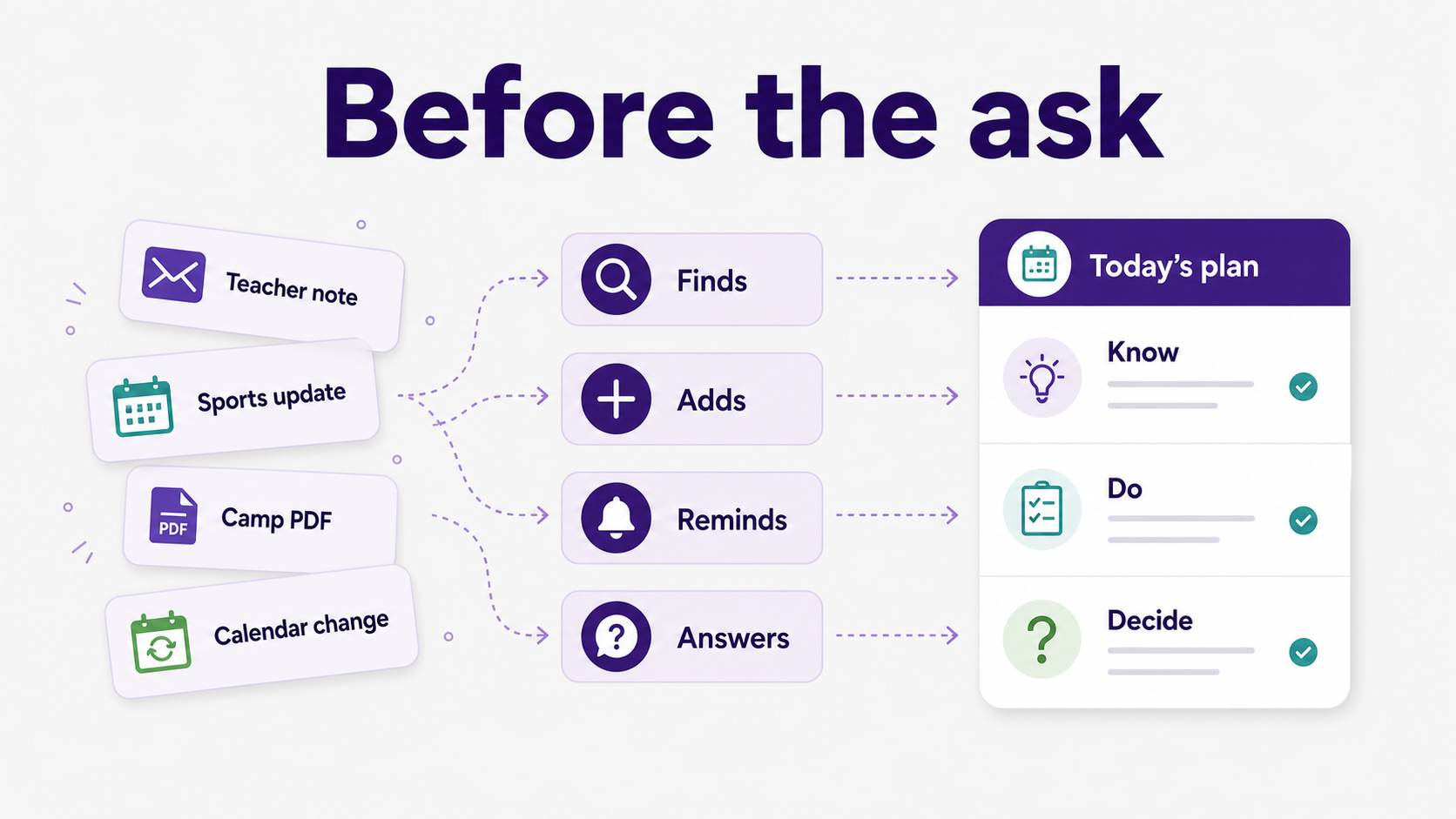
Proactive AI acts before the ask. It uses family context, finds what matters, and turns details into next steps.
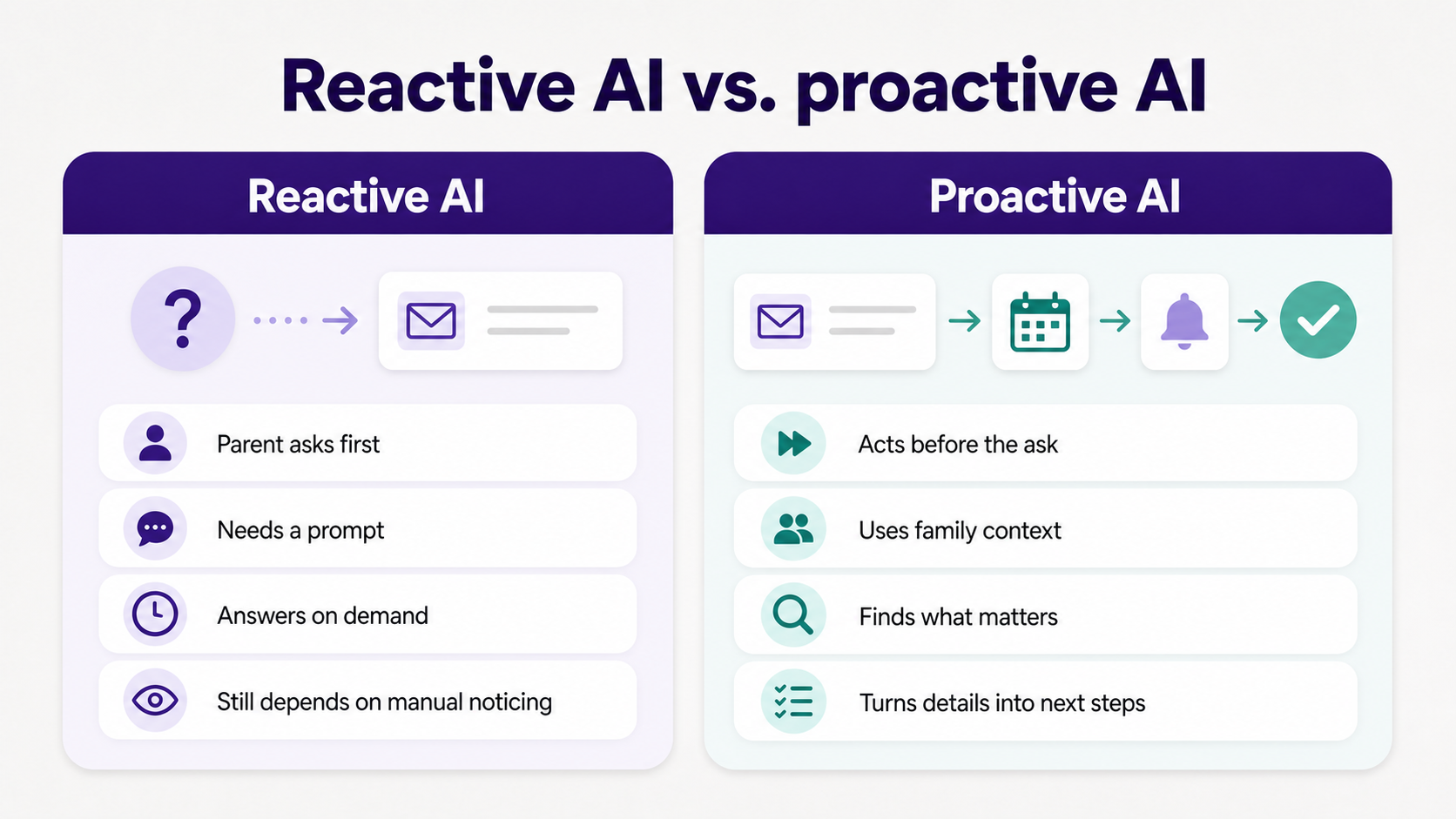
Researchers often describe current chat assistants as reactive because they mostly respond only after a user prompts them. Chen et al. call out the opportunity for assistants that help "without explicit invocation" and support mixed-initiative work (Chen et al.).
What does it mean for a family assistant to be proactive?
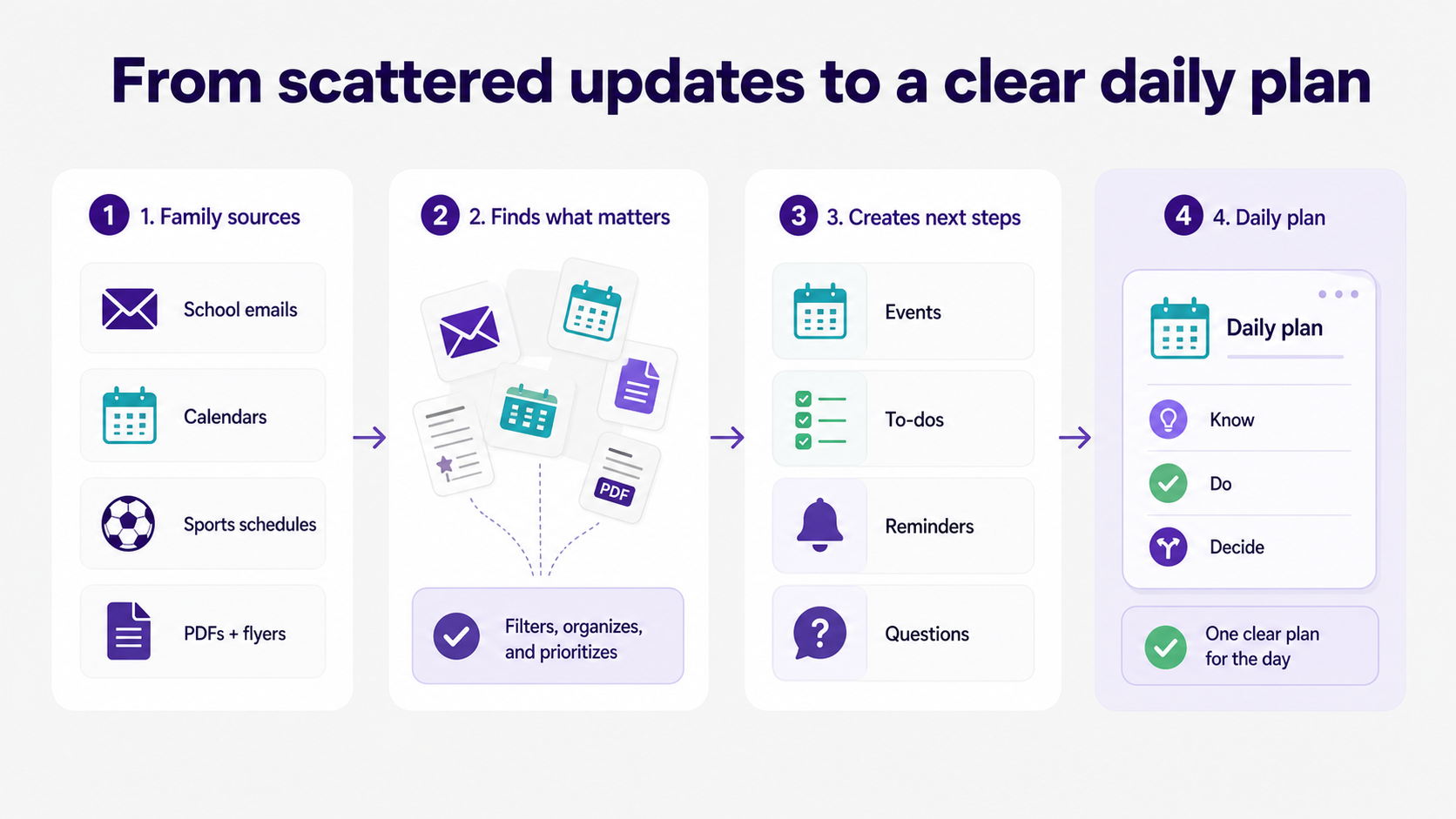
A proactive family assistant finds important family details on its own, then turns them into useful next steps. That can mean adding calendar events, creating to-dos, flagging deadlines, asking follow-up questions, or sending a clear daily plan with what parents need to know, do, and decide.
For a family, proactive does not mean noisy. A good proactive assistant should know the difference between a helpful heads-up and another interruption.
Miksik et al. describe the ideal as giving people "the right information in the right way at the right time" (Miksik et al.). Their warning matters too: proactive systems can become annoying or expose private information if they interrupt at the wrong moment.
That is the design line families should care about. The assistant should catch the school form deadline. It should not blurt private calendar details in front of the wrong person.
Why does proactive AI matter more for families than a normal chatbot?
Family admin usually starts before anyone asks a question. A parent has to read the school update, notice the date change, decide whether it matters, copy/paste the details, add the reminder, and remember to check again later. Reactive AI helps after that work has already begun.
This is why general chatbots can feel useful but incomplete for family life. They can summarize a message once you paste it in. They usually will not watch for the message, connect it to your family, and turn it into a plan without being asked.
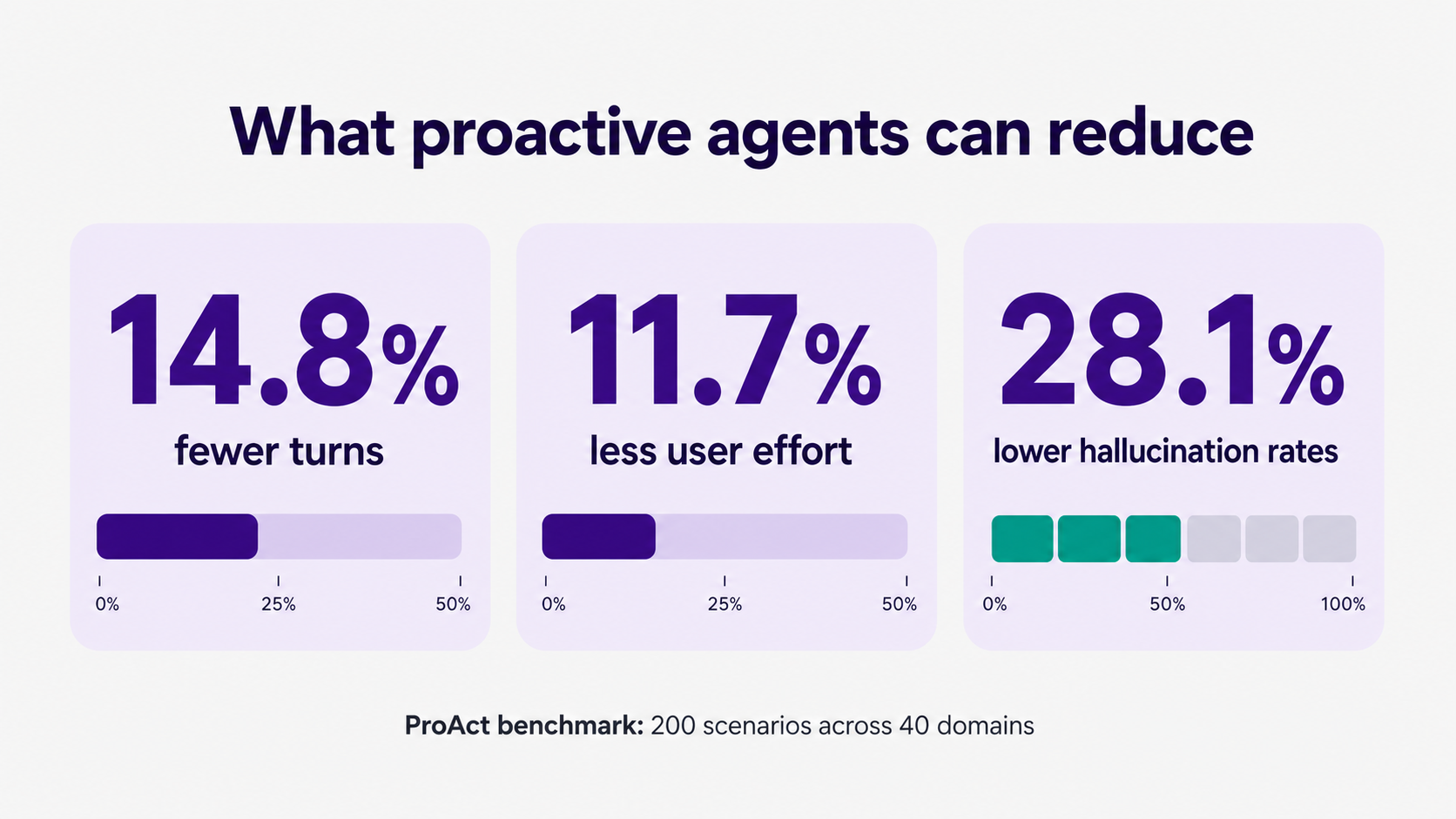
The technical reason is simple: proactive agents use context, memory, and idle time to prepare for likely needs. A 2026 ProAct benchmark across 200 scenarios and 40 domains reported 14.8% fewer required turns, 11.7% less user effort, and 28.1% lower hallucination rates versus reactive baselines (Hu et al.).
Those numbers come from a research benchmark, not a family product test. Still, the direction fits the parent experience. Less back-and-forth matters when you are making dinner, checking homework, and trying to remember whether soccer moved from one park to another.
What can reactive AI still do well for families?
Reactive AI is useful when the family has a clear question or a specific task. It can draft a message to a coach, summarize a pasted newsletter, suggest dinner ideas, or explain a confusing school policy. The parent stays in control because the AI only responds when asked.
That control is the upside. Reactive assistants are usually easier to understand because the parent sees the prompt and the answer.
The tradeoff is that reactive tools depend on the parent to bring the right information at the right time. If the park-change email gets buried, the assistant has nothing to answer. The family still has to do the finding first.
What should proactive AI avoid doing?
Proactive AI should avoid acting like it owns the family's attention. The best systems are permissioned, specific, quiet when nothing matters, and clear about why they surfaced something. Families need help spotting important details, not another feed to manage.
Family AI also has higher trust requirements than workplace AI. Family sources can include children's names, schools, calendars, medical appointments, custody routines, travel plans, payment reminders, and private messages.
A 2025 study of 12 families found that parents were already mediating children's generative AI use while worrying about safeguards and parental controls (Zhang et al.). A 2024 review of 27 studies found promise in AI for parental support, but the value depends on tailoring help to real parent needs (Ashraf).
The bar is higher at home. A proactive family assistant should earn trust through clear permissions, secure data handling, easy deletion, and useful actions parents can inspect.
How should families evaluate a proactive AI assistant in 2026?
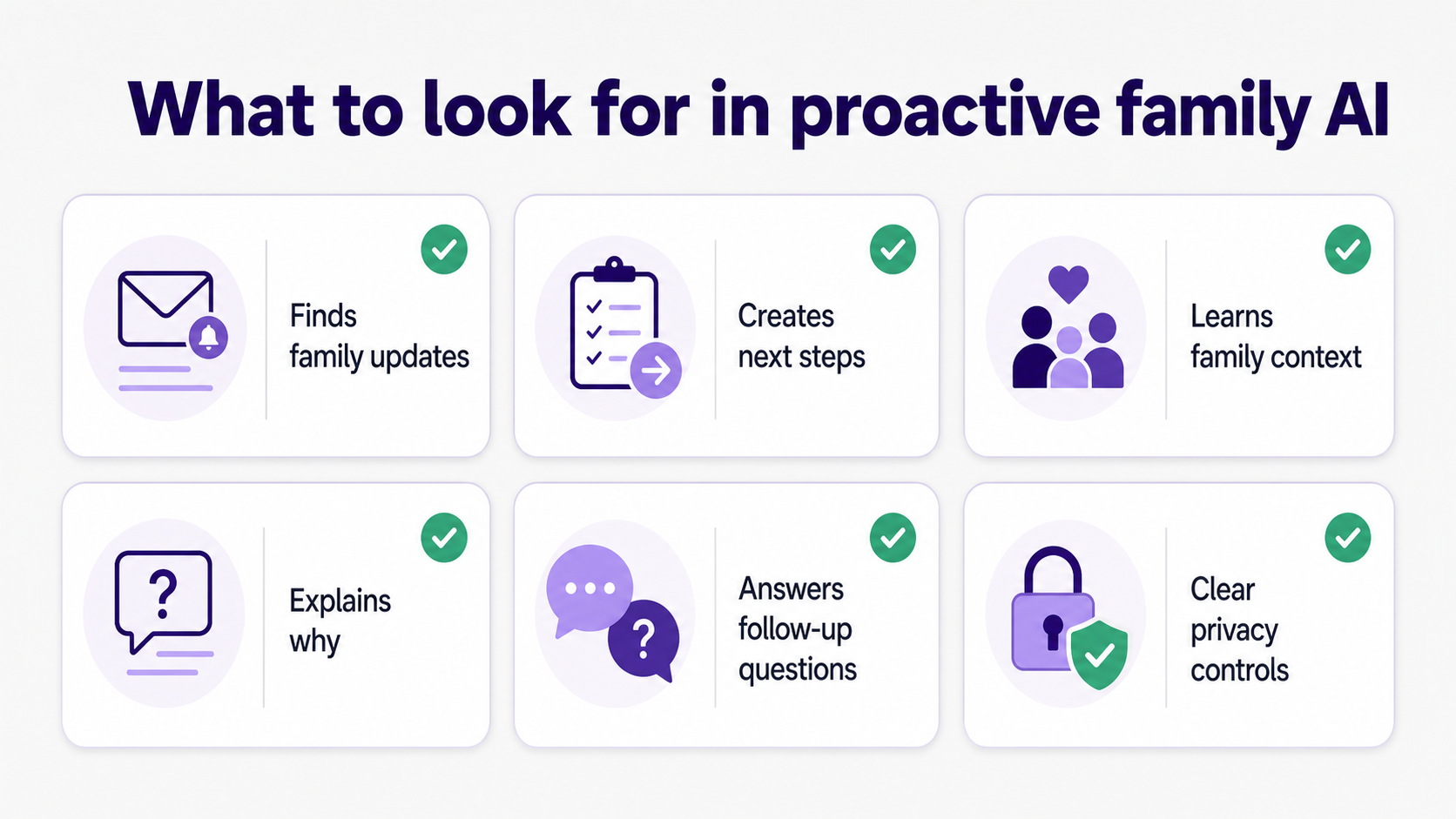
Families should judge proactive AI by the work it removes, not by how futuristic it sounds. The practical test is whether it finds important family details, turns them into next steps, and stays available when parents need to ask follow-up questions.
Use this checklist:
- Finds family-related emails and updates on its own.
- Turns details into events, reminders, and to-dos.
- Learns family context over time.
- Explains why it surfaced something.
- Lets parents ask follow-up questions by text or chat.
- Makes privacy controls clear.
- Interrupts only when the information is worth it.
Workplace AI adoption shows why this distinction is becoming normal. Microsoft and LinkedIn surveyed 31,000 people across 31 countries and found 75% of global knowledge workers already used AI at work; 90% of users said it helped them save time (Microsoft Work Trend Index).
Where does Fambot fit in proactive family AI?
Fambot is built as a proactive AI chief of staff for families, available on iOS and Android. Parents connect supported family sources once, use a shared family account when multiple adults need the plan, and Fambot reads family-related emails, school updates, calendars, PDFs, links, and schedules to find what matters and turn it into a clear daily plan.
The difference is low-input help. A calendar stores what the family adds. A chatbot answers what the parent asks. Fambot is designed to do the legwork before parents ask: find the school details, add the calendar event, create the task, send the daily digest text message, and answer follow-up questions by text or chat.
That is the family version of proactive AI. It should feel less like managing another app and more like having someone quietly keeping an eye on the moving pieces.
What is the simplest way to explain proactive AI?
Proactive AI is help that starts before you ask. For a parent, that means the assistant can notice the teacher email, find the deadline, add the reminder, and tell you what needs to happen next before the detail gets buried.
Reactive AI is still useful. It is the assistant you ask when you already know what you need.
Proactive AI is different because it watches for the thing you might miss.