
Why parents need a clear daily plan in 2026

By David Reich, Founder & CEO of Fambot
Published: August 6, 2026 · Last updated: August 6, 2026
Article Summary (TL;DR)
Most family organizing apps fade because they ask parents to build and maintain one more system. A daily family plan works better because it shows up with what parents need to know, do, and decide today. Fambot is built around that shift: it reads family sources, finds what matters, and sends a clear daily plan.
Why do most family organizing apps stop getting used?
Most family organizing apps stop getting used because they depend on the parent to keep checking, entering, sorting, and updating information. The app may be useful, but the habit is fragile. Once life gets busy, the new destination becomes another loose end instead of real help.
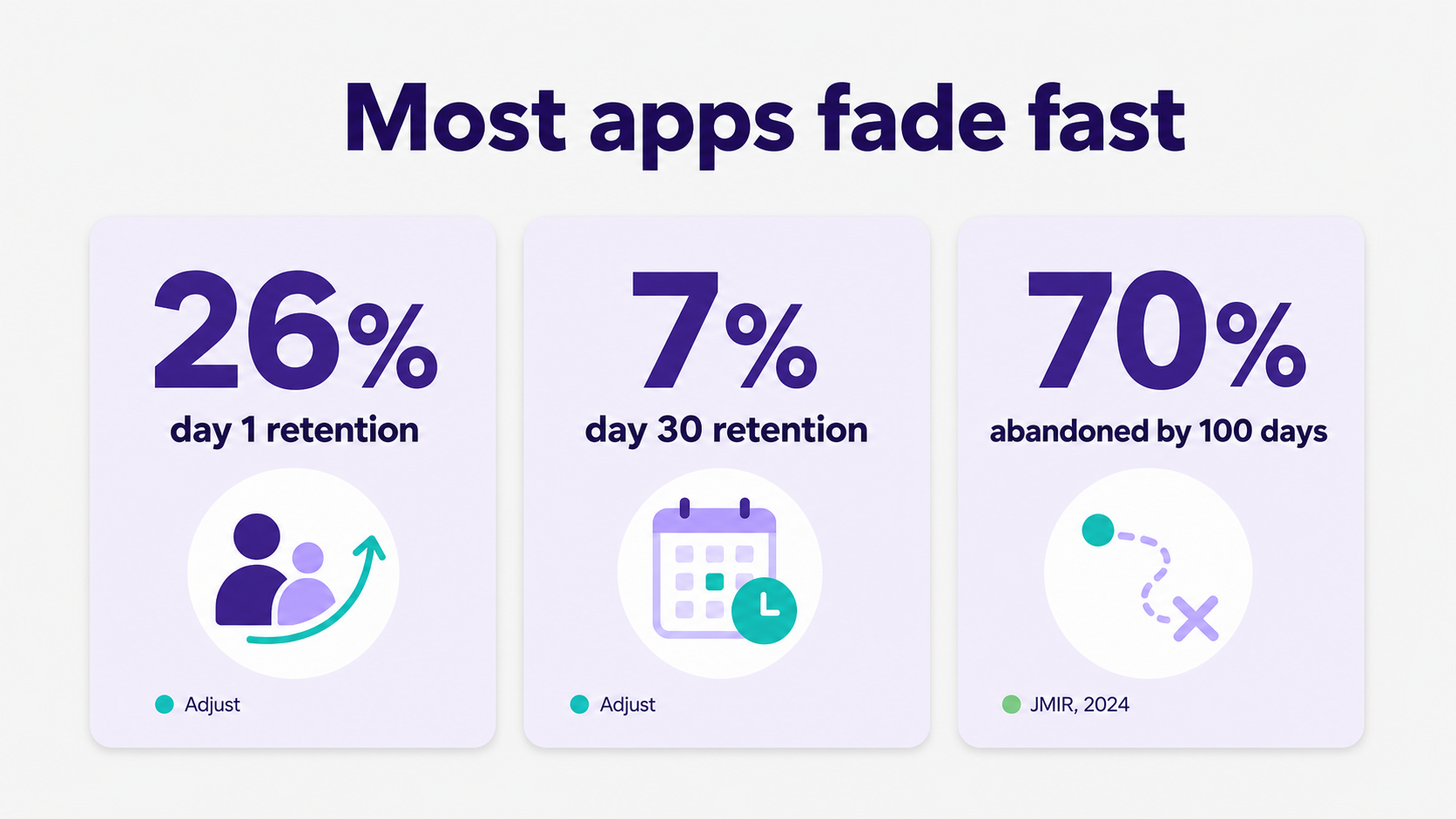
That is not a family-app problem alone. It is a basic app-retention problem. Adjust reports that median app retention across platforms and verticals drops from 26% on day 1 to 7% by day 30 (Adjust). A 2024 scoping review in the Journal of Medical Internet Research found that, across lifestyle behavior and mental health apps, a median 70% of users discontinued use within the first 100 days (JMIR).
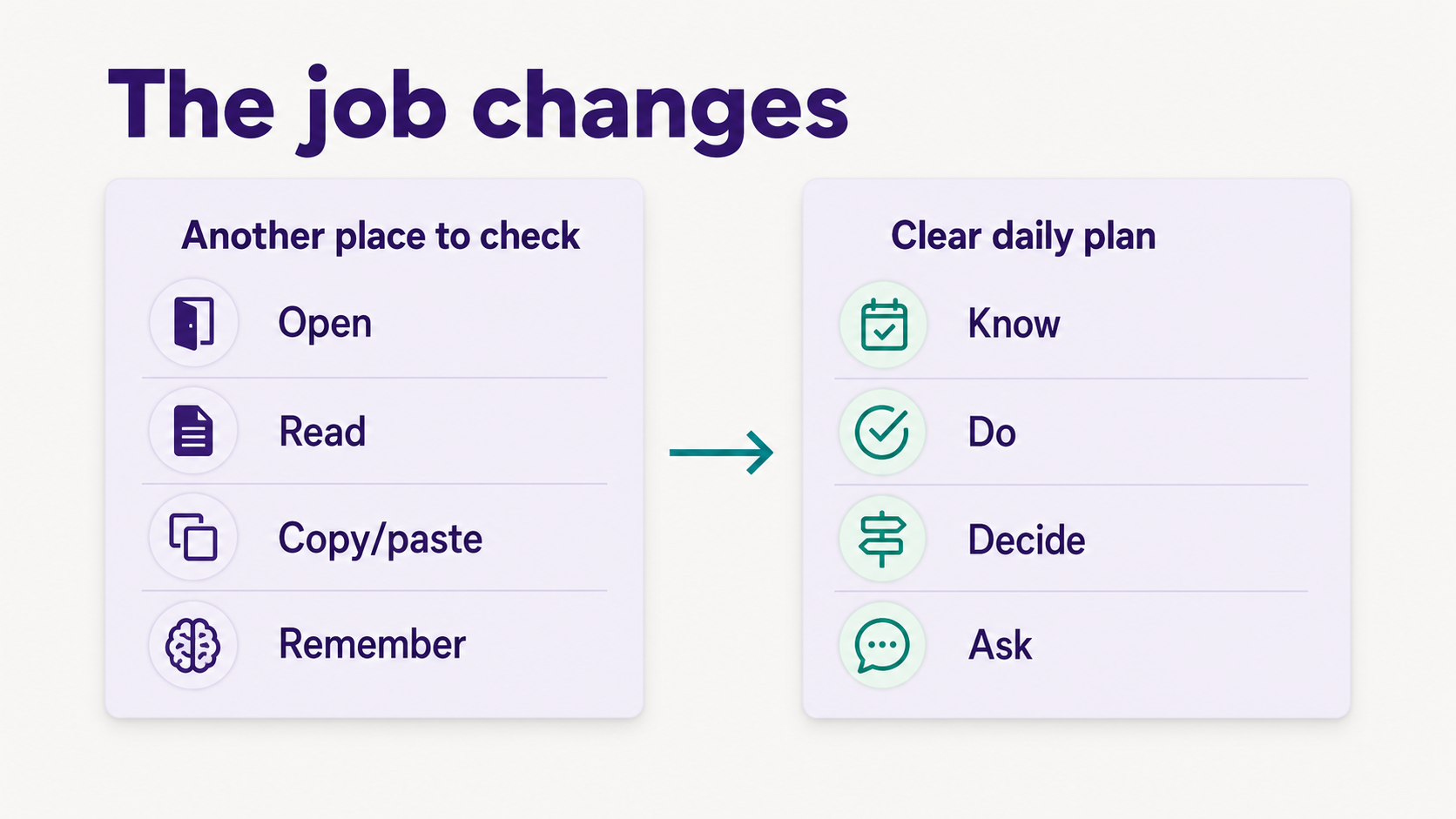
Family organizing apps have an extra hurdle. Parents usually install them because the family system is already scattered. The new app then asks them to do the exact work they were trying to escape: read every update, decide what matters, copy/paste the details, assign the task, and remember to open the app later.
Why is a daily family plan better than another app to check?
A daily family plan is better because it moves the useful information to the parent instead of making the parent go find it. The plan is short, current, and tied to today. It tells parents what to know, do, and decide without turning them into the family search engine.
A place to check still creates a chore. The parent has to remember the place, open it at the right moment, scan it, trust that it is current, and translate what they see into action. That works when life is quiet. Family life is rarely quiet at 7:18 a.m.
A daily plan changes the job. The parent starts with the answer: picture day today, soccer moved to field 3, payment due Friday, bring the signed form, ask Sam to handle pickup. The plan can still link back to details, but the first value is the summary of what matters now.
What does another place to check ask parents to do?
Another place to check asks parents to do the interpretation work themselves. It may hold the school email, newsletter, calendar invite, PDF, sports update, or group text, but the parent still has to notice it, decide whether it matters, and turn it into an event, reminder, task, or question for later.
That is why “less information” is not really the solution. Families often need the school details; they just need those details pulled out, prioritized, and made usable. NSPRA found that fewer than 6% of surveyed parents wanted less information from their school district, and fewer than 3% wanted less information from their child's school. The findings came from 5,000 parents and 2,000 district employees across 11 school systems (NSPRA information overload).
The problem is the workflow around the information. Parents get worn down by the number of channels, duplicate messages, timing, and unclear next steps. NSPRA's 2024 Profile of a School Communicator found that 83% of school communicators cited message overload as the biggest barrier to engaging families (NSPRA 2024 Profile).
The app pile can make that harder. Government Technology reported on a 2025 school-app survey with more than 100 teachers, 125 parents, and 50 K-12 administrators. In that survey, 54% of administrators said their school used 10 to 15 officially sanctioned educational apps, while 25% said they used 5 to 9 (Government Technology).
Parents do not need a prettier folder for all of that. They need the important school details pulled out and turned into something they can use.
What should a useful daily family plan include?
A useful daily family plan should include the details that change what a family does today. It should name events, times, places, forms, deadlines, things to bring, assignments, conflicts, and follow-up questions. The plan should be clear enough to read quickly and specific enough to prevent scrambling.
A strong plan answers 4 practical questions:
- What do we need to know today?
- What do we need to do today?
- What do we need to decide today?
- What should we ask next if something is unclear?
That last question matters. A plan should not strand parents with a static summary. Family life changes too quickly. If the daily plan says baseball is at 4:30, a parent should be able to ask, "Is it our day to bring snacks?" or "Where is the field?" without digging through old emails.
The National PTA's family-school technology work points to the scale of the communication problem. Its toolkit includes a landscape of 20+ communication technologies, a mapping tool for what schools use, and a comparison of 22 technologies across 7 areas of consideration (National PTA). That is useful for school systems, but it also shows why families feel as if the answer is hiding in too many places.
How does Fambot turn scattered family sources into a clear daily plan?
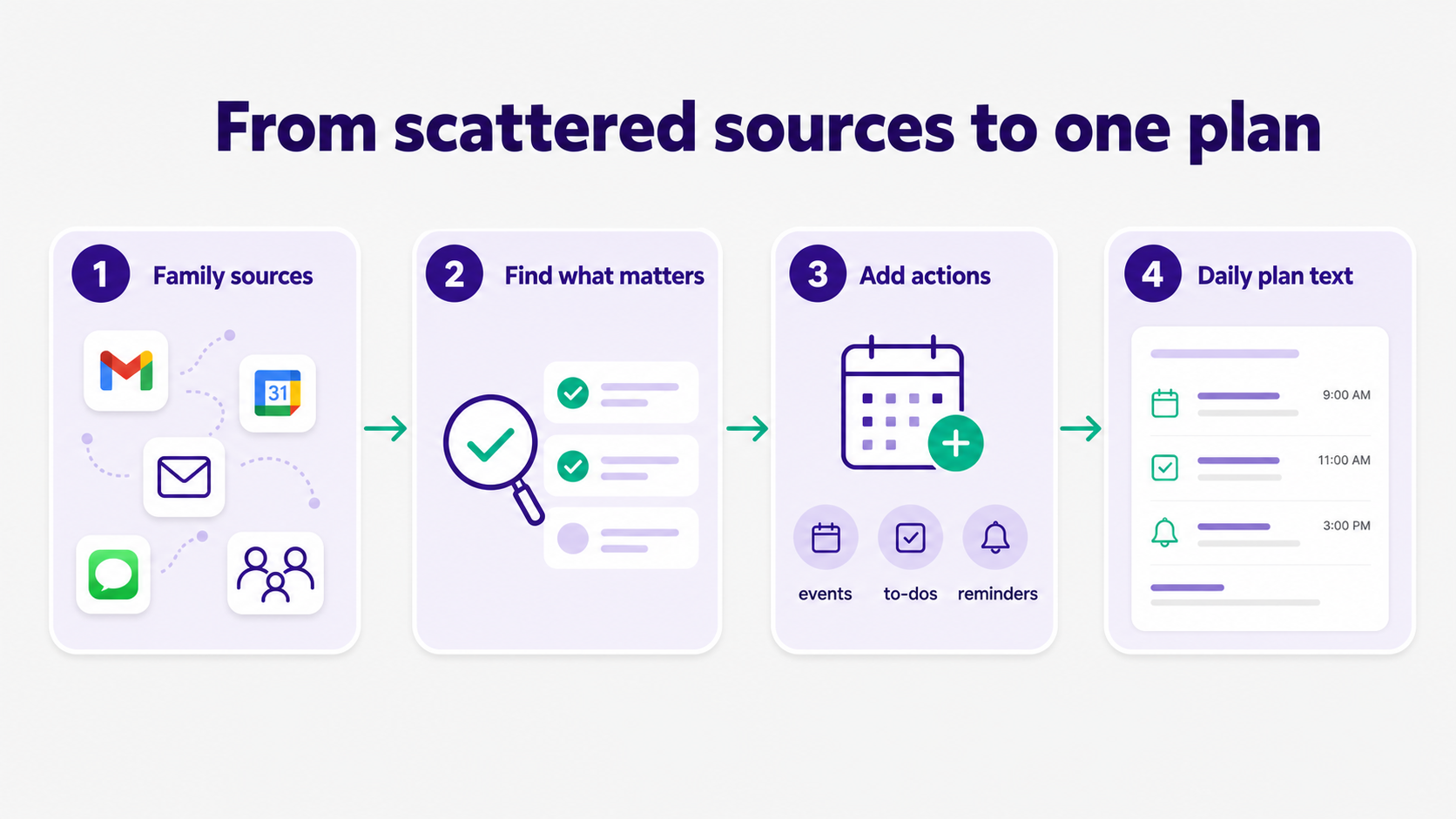
Fambot is a proactive AI chief of staff for families. Parents connect supported family sources once, then Fambot reads family-related emails, calendars, school updates, PDFs, links, sports schedules, and family context. It finds what matters and turns useful details into calendar events, to-dos, reminders, follow-up questions, and a clear daily plan.
The point is not to give families another dashboard to maintain. The point is to reduce the reading, copy/paste, forwarding, searching, and remembering that usually happens before a calendar or to-do list becomes useful.
The daily plan is a digest text message with what parents need to know, do, and decide. Parents can also ask follow-up questions by text, email, or in-app chat when they need the detail behind the plan.
Here is the practical difference:
- A shared calendar is helpful after the event is entered.
- A to-do app is helpful after the task is written down.
- A group chat is helpful after someone finds the old message.
- Fambot helps before that by reading family sources, finding the useful details, and building the plan.
How can parents tell whether a family organizing tool will last?
Parents can tell by asking whether the tool reduces daily work or moves daily work into a different box. A lasting tool should fit the family's existing channels, support a shared family account, work on iOS and Android, send useful reminders, and make follow-up questions easy. The best test is whether parents get value before they manually rebuild the family system.
Use this quick test before adding another family app:
- Does it find family details on its own?
- Does it turn updates into actions, events, or reminders?
- Does it send the plan where parents already pay attention?
- Does it work when a parent forgets to open the app?
- Does it let parents ask follow-up questions?
- Does it reduce copy/paste and forwarding?
- Does it make ownership clearer across the family?
If the answer is mostly no, the app may still be useful, but it will depend on a parent to keep it alive. That is exactly where many family systems already break.
What is the simplest first step for parents?
The simplest first step is to stop measuring a tool by how organized it looks when it is empty. Measure it by how much work it removes on a normal day. Pick one recurring pain point, such as school emails or sports schedules, and ask what has to happen before that information becomes useful.
The list is usually longer than expected: read the update, find the date, decide whether it matters, add it to the calendar, create the reminder, tell the right person, remember the supplies, and find the message again later.
That is the real job. Families do not need another place to check because the important work happens before checking. They need a daily plan that catches the details early, turns them into action, and stays easy to ask when the day changes.
Sources
- Adjust - Used for median mobile app retention benchmarks across day 1 and day 30.
- JMIR - Used for the 2024 scoping review finding that a median 70% of users discontinued lifestyle behavior and mental health apps within 100 days.
- NSPRA information overload - Used for parent survey data showing families often want school information, but struggle with channels and overload.
- NSPRA 2024 Profile - Used for the 83% message-overload barrier among school communicators.
- Government Technology - Used for the 2025 school-app survey covering parent, teacher, and administrator views of app overload.
- National PTA - Used for the family-school communication technology toolkit and the scale of tools schools may use.